LessonNormal Ventilation Vs. Artificial Ventilation
Normal Ventilation vs. Artificial Ventilation
The Physics of Breathing
The way air enters the lungs during normal breathing is fundamentally different from the way it moves during artificial ventilation.
Understanding this difference is critical, since positive-pressure ventilation (PPV) changes not only airflow but also physical circulation and gastric pressures inside the body.
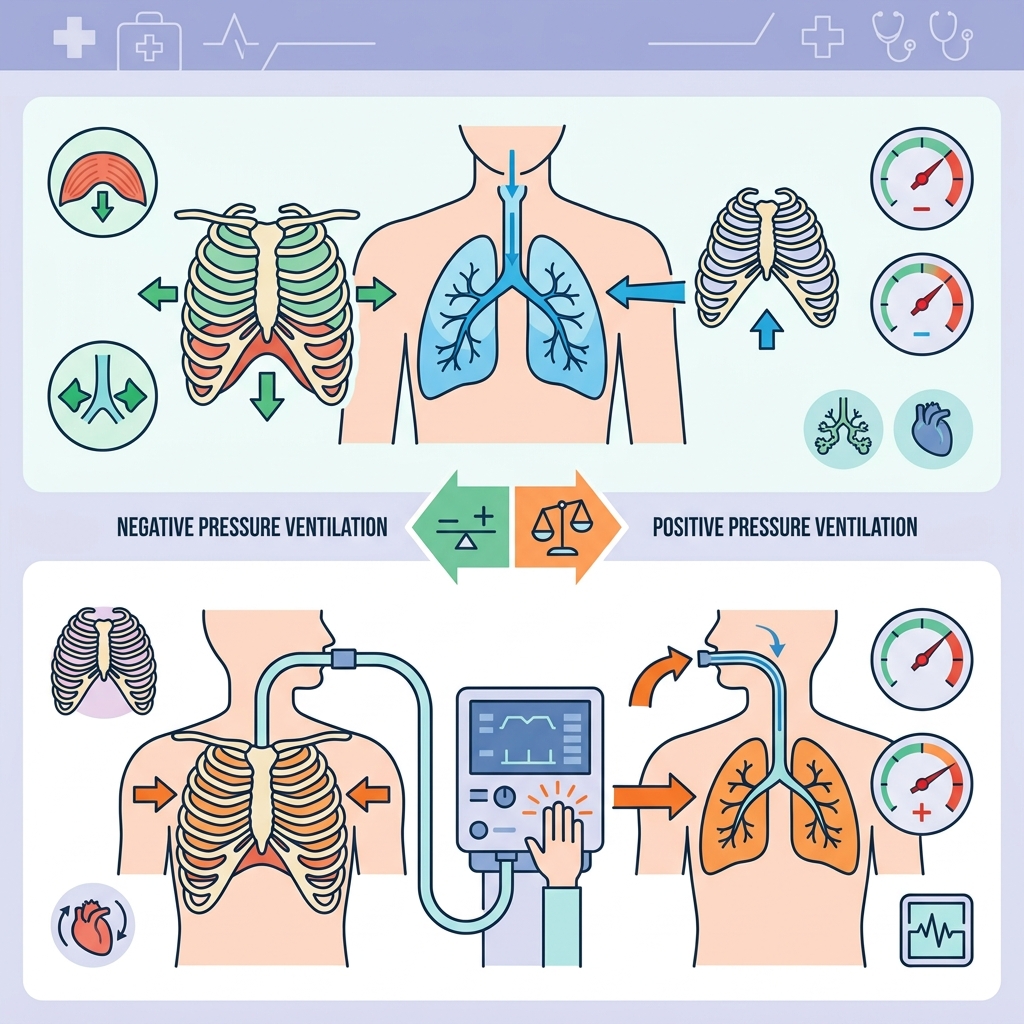
Natural (Spontaneous)
Negative Pressure
When the diaphragm contracts downward, the chest cavity expands, creating a vacuum effect that actively pulls air into the lungs. This process is controlled automatically by chemoreceptors sensing CO₂ levels.
Artificial (BVM)
Positive Pressure
Air is artificially pushed into the lungs. This change in direction—from "pulling" to "pushing"—creates several important and potentially dangerous physiological side effects inside the chest cavity.
Physiological Effects of Artificial Ventilation
1. Air Movement
Positive pressure forces air into the lungs, potentially over-stretching delicate alveolar tissue. Clinical Risk: Over-inflation can rupture alveoli, causing severe barotrauma or pneumothorax.
2. Blood Movement
Normal inspiration assists venous return (blood flowing back to the heart) by creating a vacuum in the chest. Positive pressure reverses this effect.
- Each assisted breath increases intrathoracic pressure, which crushes the vena cava and reduces venous return.
- Less blood returning to the heart plummets cardiac output and blood pressure.
- In hypotensive patients (trauma, sepsis), excessive positive pressure can cause immediate cardiac arrest.
3. Esophageal Inflation
During normal breathing, the esophagus remains closed to prevent air entry into the stomach. Under positive pressure, air can easily be forced open into the stomach, leading to Gastric distention and extreme vomiting risk.
Summary Comparison Table
| Feature | Natural (Negative) | Artificial (Positive) |
|---|---|---|
| Mechanism | Pulled in by diaphragm | Pushed in by an external force (BVM/Vent) |
| Circulation | Promotes venous return | Reduces venous return and Cardiac Output! |
| Barotrauma Risk | Minimal | Highly Increased if naturally over-ventilated |
| Gastric inflation | Rare | Common without strict airway control |
| Regulator | Autonomic feedback | Provider-controlled |