LessonCardiac Tamponade
Cardiac Tamponade
Cardiac tamponade occurs when fluid accumulates in the pericardial space (the sac surrounding the heart) and begins to restrict cardiac filling, leading to decreased cardiac output.
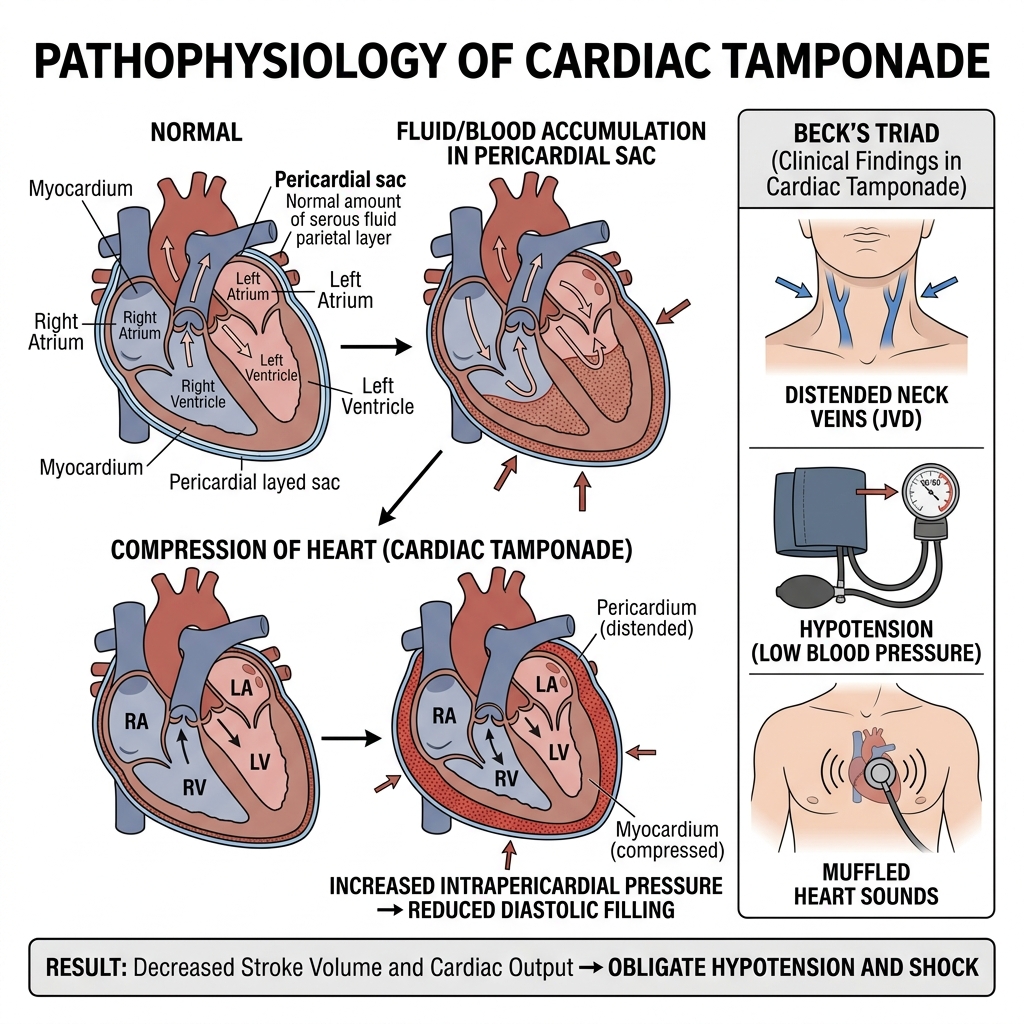
Pathophysiology
The pericardium is relatively non-distensible, so even a small amount of fluid can create significant pressure.
- Penetrating injury damages the heart and pericardium
- The pericardial sac seals around the injury
- Blood accumulates within the pericardial space
- Rising pressure compresses the heart
Hemodynamic Effects
CO = SV × HR
As preload drops (reduced ventricular filling): Cardiac output falls, Contractility becomes less effective, and Blood backs up into the venous system.
↓ Preload → ↓ Stroke Volume → ↓ Cardiac Output → Venous backup → Hypotension
Classic Presentation (Beck’s Triad)
The hallmark findings include:
These findings may not all appear early—maintain suspicion in trauma patients. Narrow pulse pressure (decreased difference between systolic and diastolic pressure) may also be present.
Additional Finding: Pulsus Paradoxus
Significant drop in systolic blood pressure during inspiration. Indicates worsening cardiac compression and suggests impending hemodynamic collapse.
Management
Focus on supporting perfusion and rapid transport.
Airway & Breathing
- Ensure patency, Monitor for declining mental status
- Differentiate from other causes (e.g., tension pneumothorax)
- Administer high-flow oxygen (NRB 12–15 L/min) and Assist ventilations if needed
Circulation & Interventions
- Establish IV access and administer isotonic fluids (up to ~30 mL/kg in boluses). Helps increase preload temporarily and may improve cardiac output.
- Definitive Consideration: Pericardiocentesis (Needle decompression of pericardial space). May be performed in select systems. Consider ALS intercept if available.
Key Takeaway
- Cardiac tamponade is a rapidly fatal condition if not recognized early.
- Caused by pressure around the heart limiting filling.
- Presents with JVD, hypotension, and muffled heart sounds.
- Maintaining preload and oxygenation buys time—but definitive treatment requires relieving the pressure on the heart.