LessonSafe Ambulance Driving
Safe Ambulance Driving
Safe Ambulance Driving Practices
Many EMS systems continue to respond using lights and sirens. However, once the patient has been loaded, the need for lights and sirens during transport should be carefully evaluated.
Lights and sirens should not be used for patients who are stable or do not require urgent transport. Their use should be reserved only for situations where the patient’s condition is serious and time-sensitive.
The provider attending to the patient in the back of the ambulance is typically responsible for determining whether lights and sirens are necessary during transport. This decision should be made thoughtfully, weighing both patient needs and overall safety.
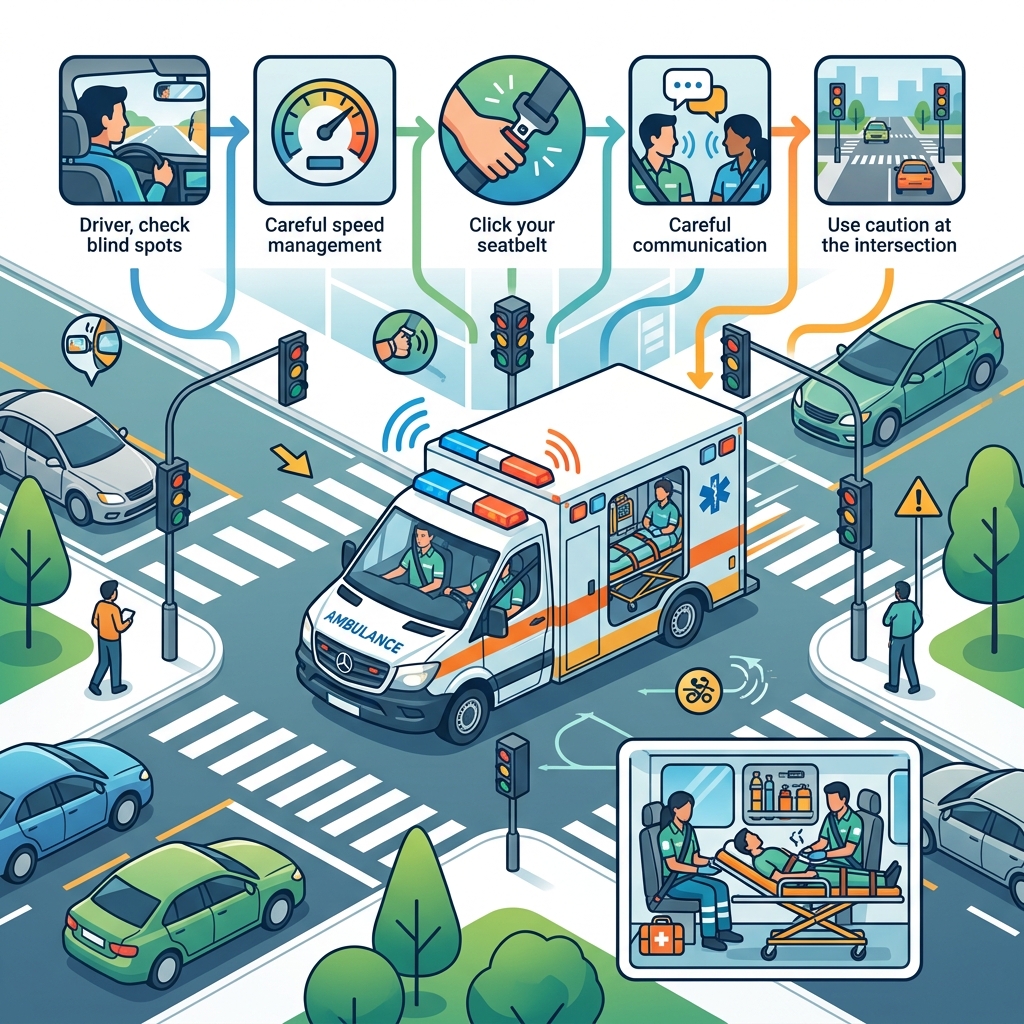
Safety Inside the Ambulance During Transport
Providing care inside a moving ambulance presents unique risks. Sudden stops, turns, and uneven road conditions can make it dangerous to move freely within the patient compartment.
To reduce risk:
- Remain seated and properly restrained whenever possible
- Avoid removing your seatbelt unless a critical intervention is required
Whenever possible, perform necessary treatments before transport begins. The moving environment makes many procedures more difficult and less effective.
Prioritize Before Transport:
Interventions that should ideally be completed prior to transport include:
- Initiating CPR devices
- Establishing IV access
- Applying oxygen therapy
- Stabilizing fractures or securing impaled objects
Equipment and Scene Readiness
Before the ambulance begins moving, ensure the interior is secure:
Loose equipment can become dangerous during sudden movement, posing a risk to both providers and patients.
Key Reminder
Transport decisions should always balance patient needs with provider safety. A controlled, safe environment leads to better patient outcomes than unnecessary speed or risk.