LessonAutonomic Control of Cardiac Function
Autonomic Control of Cardiac Function
Cardiac cells can generate their own electrical impulses, but heart rate and contractility are continuously adjusted by the autonomic nervous system (ANS) to maintain stability.
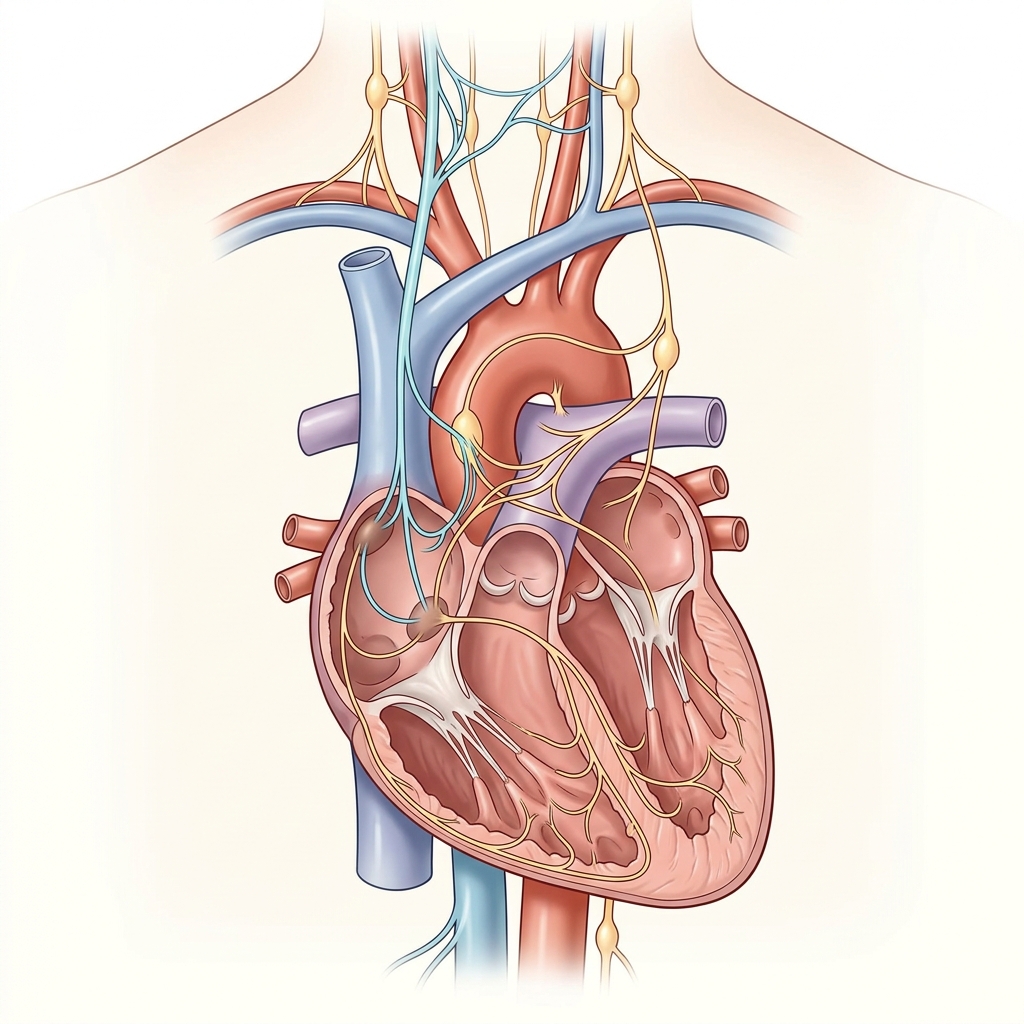
Sympathetic vs Parasympathetic Effects
Sympathetic Nervous System (SNS)
"Fight-or-Flight"
Releases Epinephrine, Norepinephrine, Dopamine.
- ↑ Heart rate
- ↑ Contractility
- ↑ Conduction speed
Active during Exercise, Stress, and Shock states.
Parasympathetic Nervous System (PNS)
"Rest and Digest"
Releases Acetylcholine. Mediated by the vagus nerve (CN X).
- ↓ Heart rate
- ↓ Conduction through AV node
- ↓ Cardiac workload
Acts as a braking system to balance sympathetic activity.
Example: Diving Reflex
Cold water exposure → strong vagal response. Causes Bradycardia and reduced blood flow to extremities to preserve oxygen for vital organs.
ANS Effects on Cardiac Electrical Activity
The SA node sets the baseline rhythm, but the ANS modifies it:
- Sympathetic Stimulation: ↓ Refractory period, ↑ Automaticity, ↑ AV conduction (↓ PR interval)
- Parasympathetic (Vagal) Stimulation: ↑ Refractory period, ↓ Automaticity, ↓ AV conduction (↑ PR interval)
Baroreceptor Reflex (Rapid BP Control)
Located in the Carotid sinus and Aortic arch, they detect changes in blood pressure and trigger rapid compensation. They are extremely fast and more immediate than hormonal systems.
- If Blood Pressure Drops: Activate SNS → Vasoconstriction, ↑ Heart rate, ↑ contractility.
- If Blood Pressure Rises: Activate PNS → Vasodilation, ↓ Heart rate.
Position Changes & Reflexes
- Standing → Drop in BP: Baroreceptors activate SNS (↑ HR, ↑ contractility, vasoconstriction)
- Lying Down → Increased BP: Baroreceptors activate PNS (↓ HR, vasodilation)
- Hering-Breuer Reflex: Prevents lung overexpansion via the vagus nerve.
Tropic Terminology
- Inotropic: Force of Contraction
- Chronotropic: Heart Rate
- Dromotropic: Conduction Speed
Key Takeaways
- Heart has intrinsic rhythm, but ANS fine-tunes it
- SNS = ↑ HR, ↑ contractility, ↑ conduction
- PNS = ↓ HR, slows conduction
- Vagus nerve = primary parasympathetic control
- Baroreceptors = rapid BP regulation system
- Inotropy = force, Chronotropy = rate, Dromotropy = conduction