LessonChest Pain Assessment
Chest Pain Assessment
Chest pain is a high-risk complaint that requires rapid evaluation. While many causes are benign, some are immediately life-threatening. The goal is to identify serious causes early and guide treatment and transport decisions.
Acute Coronary Syndrome (ACS)
ACS refers to reduced blood flow to the heart muscle, with or without permanent damage. It includes STEMI, NSTEMI, and Unstable angina. These are managed similarly in the prehospital setting.
Common Causes of Chest Pain
Non-Cardiac (Most Common)
- Musculoskeletal: rib injury, strain, arthritis
- GI: GERD, esophagitis, esophageal rupture
Cardiac
- Acute coronary syndromes
- Pericarditis
- Aortic dissection
- Valvular disease / Heart failure
Pulmonary (High Risk)
- Pulmonary embolism
- Pneumonia
- Pneumothorax
- Asthma / COPD
Even non-cardiac causes can deteriorate rapidly.
Primary Survey
- Airway: Can the patient speak clearly? Listen for abnormal airway sounds. Open airway manually if needed.
- Breathing: Assess rate and effort. Look for increased work of breathing and signs of fluid in lungs (rales, frothy sputum). Respiratory distress = higher risk of deterioration.
- Circulation: Check pulse, blood pressure, and skin (color, temp, perfusion).
Important Pulse Findings
- Pulse deficit: irregular perfusion (e.g., atrial fibrillation)
- Pulsus paradoxus: drop in systolic BP with inspiration → think tamponade
- Pulsus alternans: alternating strong/weak beats → LV dysfunction
Secondary Survey
Confirm chest pain is the primary issue. Look for associated signs & symptoms like sudden onset, shortness of breath, nausea/vomiting, diaphoresis, dizziness, syncope, or a feeling of impending doom.
Other Patterns
- Pneumonia: fever + pleuritic pain + cough
- Musculoskeletal: localized, reproducible, worse with movement
- GERD: burning, worse lying down, improves sitting up
OPQRST Assessment
ACS often presents as a pressure/squeezing that radiates to jaw, neck, arm and is not relieved by rest.
Focused Physical Exam
- Neck: JVD suggests cardiac backup. Tracheal movement indicates respiratory distress.
- Chest / Thorax: Palpate for tenderness (musculoskeletal source).
- Cardiac: Assess heart sounds (S1/S2, extra sounds, murmurs).
- Lungs: Check for equal chest rise, Rales (fluid), Wheezes (bronchospasm), Absent sounds (possible pneumothorax).
- Vascular: Check peripheral pulses. Assess for abdominal pulsations (AAA concern).
Diagnostics & Monitoring
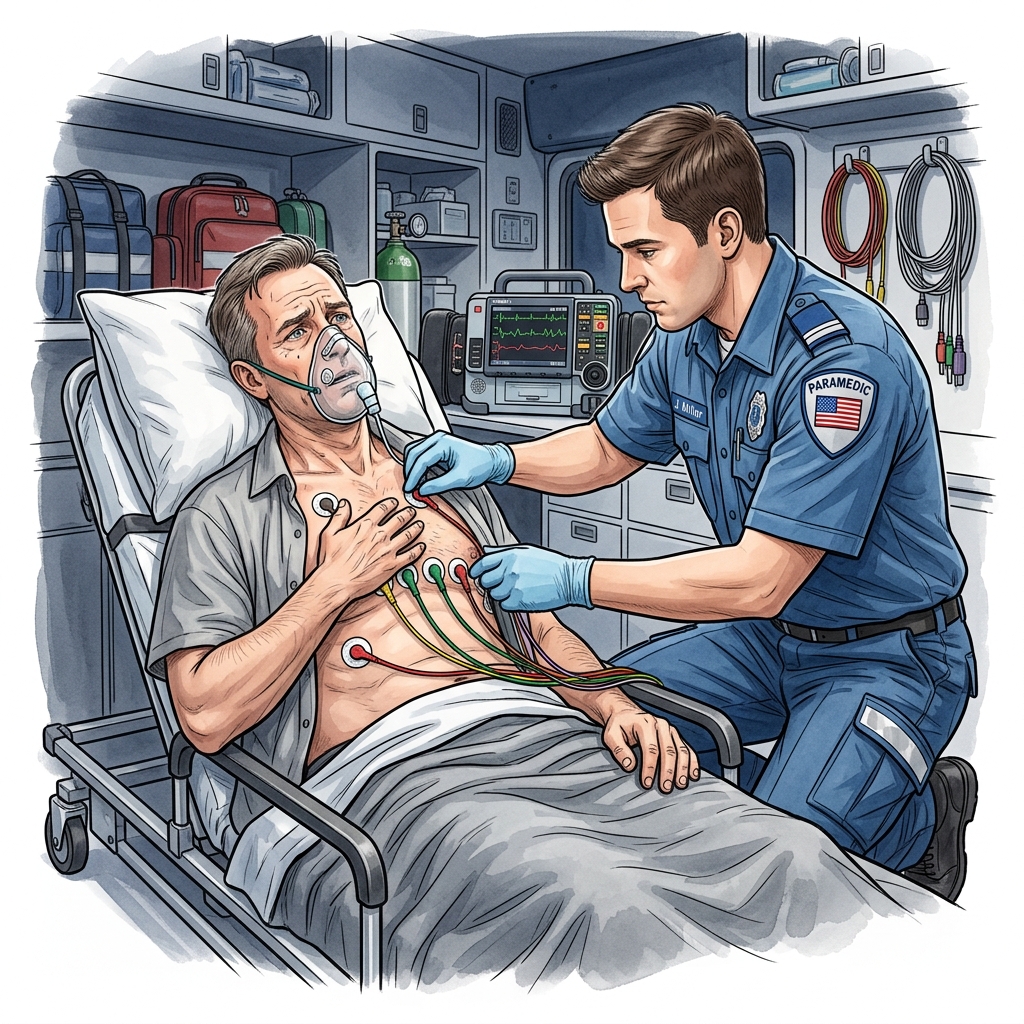
Monitor heart rate, blood pressure (trend matters), respiratory rate, SpO&sub2;, and blood glucose. The 12-Lead ECG is critical for identifying cardiac causes. Look for ST elevation (myocardial infarction) and ST depression (ischemia). Obtain ETCO&sub2; if available to help assess perfusion and ventilation.
Key Takeaways
- Most chest pain is not cardiac—but assume it could be
- ACS can present with classic OR subtle symptoms
- Respiratory findings often point to serious pathology
- Pulse abnormalities can indicate critical cardiac issues
- 12-lead ECG is one of the most important tools