LessonHyperkalemia
Hyperkalemia
Hyperkalemia refers to a highly dangerous, abnormally elevated level of Potassium in the bloodstream.
Vital Intracellular Cation
Potassium is the absolute primary Intracellular cation. Sodium is the primary Extracellular cation.
This precise gradient difference across the cell membrane is the literal foundation of nerve impulse transmission, muscle contraction, and cardiac electrical stability.
Causes of Hyperkalemia
Potassium balance is maintained by intake (oral/IV), storage (inside cells), and excretion (kidneys). Hyperkalemia typically results from either massive shifting OUT of the cells, or critically decreased renal excretion.
1. Shifting OUT of Cells
- Metabolic acidosis
- Insulin deficiency (DKA) / Hyperglycemia
- Tissue breakdown (Trauma, Burns, Rhabdomyolysis)
- Medications (Beta-blockers, Digoxin)
- Massive blood transfusions
Insulin & Potassium
Insulin fundamentally promotes potassium movement into cells. A severe lack of insulin allows massive amounts of potassium to accumulate aggressively in the bloodstream.
2. Decreased Excretion
- Kidney dysfunction (Acute or Chronic Renal Failure)
- Low aldosterone levels
- Volume depletion
- Medications (ACE inhibitors, NSAIDs, Spironolactone)
Signs, Symptoms & EKG Findings
Clinical Presentation
- Palpitations
- Muscle weakness or paralysis
- Paresthesias (numbness/tingling)
- Dysrhythmias leading to cardiac arrest
Severe effects rapidly manifest when Potassium exceeds ~7 mEq/L.
Important Lab Artifact
Rough blood draws causing Hemolysis can falsely elevate potassium levels on the lab report! Always correlate with clinical findings.
Treatment Strategy
⚡ Acute Management
- 1. IV Calcium: (Gluconate or Chloride) Instantly stabilizes failing cardiac membranes. *Chloride provides more elemental calcium but is harsher on veins.
- 2. IV Insulin + Glucose: Violently shifts potassium securely back inside the cells.
- 3. Diuretics: Forces potassium excretion in the urine.
- 4. Dialysis: Ultimate, definitive removal in severe cases.
Key Takeaway
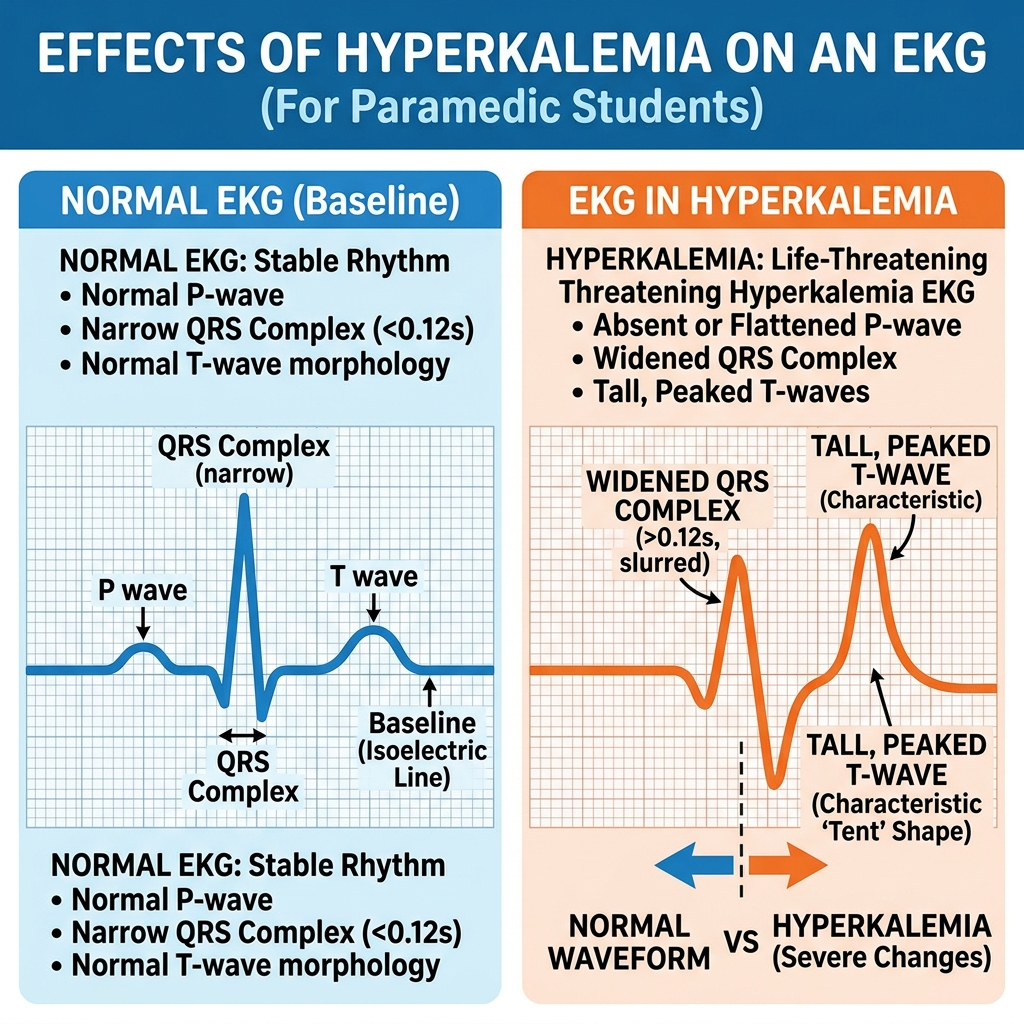
Hyperkalemia primarily targets cardiac conduction and smooth muscle function. Look immediately for tall, peaked T-waves and widened QRS complexes.
Rapid recognition and IV Calcium administration are critical to prevent fatal arrhythmias.